
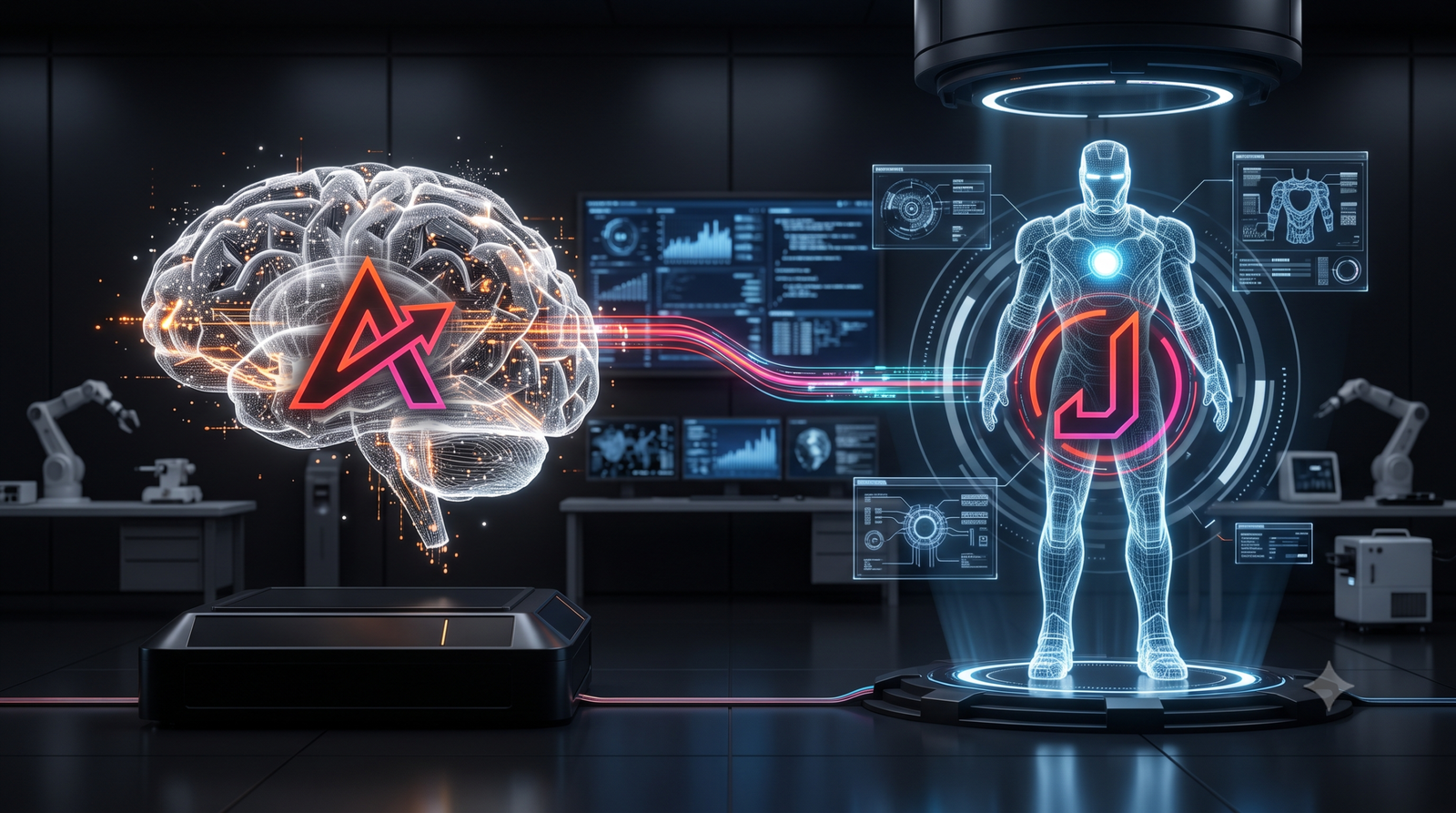


When Tony Stark stood in his Malibu workshop in the 2008 movie Iron Man, speaking casually to the ceiling while holographic schematics spun in midair, millions of viewers thought the same thing: science fiction is cool, but we’re a century away from that. Stark’s digital butler, J.A.R.V.I.S. (Just A Rather Very Intelligent System), didn’t wait around for someone to click a search button or type a prompt. He listened, watched, reasoned through complex engineering problems, manipulated software on the fly, and acted as an effortless extension of Stark’s mind.
Today, frontier AI models like ChatGPT (GPT-6 Astra)—alongside Google’s real-time vision initiative Project Astra—have pulled humanity startlingly close to that fictional universe.
What makes an AI system like Astra so radically different from the text chatbots of yesterday, what can it actually do in practical terms, and how close does it bring you to living like Tony Stark?
What Is “Astra”? Decoding the Next Era of AI
In the world of AI, the moniker Astra represents a pivotal leap: the transition from a passive, text-answering machine to an active, multimodal, autonomous computer operator.
-
In OpenAI’s ecosystem, GPT-6 Astra represents a frontier leap in computer use, agentic workflows, complex software engineering, and scientific problem-solving. It doesn’t just answer questions about code or data; it takes the reins of software, clicks through interfaces, creates 3D models, analyzes spreadsheets, and operates your digital workspace like an expert colleague sitting next to you.
-
In Google’s ecosystem, Project Astra pioneers real-time “eyes and ears”—an AI assistant capable of looking through your camera or smart glasses, understanding what it sees with zero lag, and remembering where you set down your car keys.
Together, the “Astra paradigm” shifts AI away from:
“You ask me a question, I write you an essay.”
And turns it into:
“You give me an objective, and I see what you see, use your computer, and complete the job.”
Core Capabilities: What Can Astra Actually Do?
To understand Astra without getting lost in technical jargon, imagine hiring a tireless, lightning-fast digital intern who has read every manual on Earth and knows how to use every mouse, keyboard, and camera.
1. Direct Computer Use (Operating Software for You)
Traditional AI could give you a recipe, but it couldn’t open your grocery app, add items to your cart, and schedule a delivery. Astra bridges that gap.
Through advanced computer use capabilities, Astra can look at a computer screen just like a human does. It identifies buttons, dropdown menus, text fields, and icons.
-
The Layman Example: You can say, “Take this folder of fifty PDF invoices, extract the total cost and client name from each, paste them into our online accounting portal, and flag any discrepancies.” Astra can open the browser, log in, navigate the forms, and complete the data entry in minutes—tasks that used to consume entire afternoons.
2. “See What I See”: Continuous Real-Time Vision
Early vision AI required you to snap a photo, upload it, and ask, “What is this?” Astra systems operate on a continuous live video and audio feed.
-
If you point your phone or smart glasses at a broken bicycle gear, Astra identifies the misaligned derailleur in real time, explaining out loud which screw to turn while you look at it.
-
If you are sketching an idea on a whiteboard, it can read your handwriting, spot a flaw in your calculation, and suggest an alternative before you finish capping your marker.
3. Deep Agentic Workflows & Multi-Step Problem Solving
Older chatbots frequently suffered from digital “short-term memory loss.” If you asked them to build a complex software project, they would forget earlier constraints halfway through.
Astra uses agentic loops and persistent memory. It breaks a large goal into smaller phases:
-
Planning: Figuring out what tools and steps are required.
-
Execution: Doing step one (e.g., writing a script, setting up a database).
-
Verification: Testing whether the step worked. If it encountered an error, it doesn’t give up; it reads the error log, fixes the code, and tests it again.
-
Delivery: Handing you the finished product only after verifying that it functions properly.
4. Professional Artifact Creation
Instead of outputting walls of generic text, Astra can generate fully styled, professional-grade deliverables:
-
Interactive Presentations: Producing ready-to-present slide decks that adhere to corporate branding and narrative pacing.
-
3D Design & Engineering: Translating simple natural-language prompts into 3D models in software like Blender or designing printed circuit board (PCB) layouts in engineering tools like KiCad.
-
Scientific Analysis: Running statistical regressions, plotting gene variations, or simulating physics models directly inside technical software.
Astra vs. J.A.R.V.I.S.: The Ultimate Head-to-Head
To see just how close we are to Marvel’s vision, let’s pit Astra directly against Tony Stark’s legendary AI across five key battlegrounds.
| Feature / Dimension | J.A.R.V.I.S. (Marvel Cinematic Universe) | ChatGPT Astra (Modern Frontier AI) | The Verdict |
| Conversational Flow & Wit | Effortless British deadpan sarcasm; zero latency; understands nuanced subtext and irony. | Natural, low-latency speech; understands tone and intent, but lacks genuine human personality and self-awareness. | J.A.R.V.I.S. Wins: Movie charisma and organic conversational cadence remain unmatched by silicon. |
| Multimodal Perception | Watches entire rooms via holographic cameras, detects vital signs, monitors atmospheric pressures. | Analyzes video, audio, screen pixels, and documents simultaneously with impressive accuracy. | Tie (Conceptually): Astra’s vision and screen reading mimic J.A.R.V.I.S. astonishingly well, though limited to device sensors. |
| Software & Computer Control | Hacks satellites, manipulates holographic interfaces, writes software overnight. | Navigates web browsers, writes/tests code, operates enterprise CRMs, designs PCBs. | Astra is Closer Than You Think: For civilian software workflows, Astra does what Stark’s monitors depicted. |
| Physical World Interaction | Controls robotic arms (Dum-E), assembles flight-capable armor, flies suits remotely. | Software-only; relies on connected APIs and third-party robotic integrations. | J.A.R.V.I.S. Wins by a Mile: Astra has no physical hands or integrated workshop robotics. |
| Reasoning & Logic Limits | Solves time travel (in Endgame) and creates new elements; never hallucinates or makes silly errors. | Solves open frontier math problems, but can occasionally misinterpret complex visual clutter or produce logical bugs. | J.A.R.V.I.S. Wins: Hollywood AI enjoys 100% fictional reliability; real AI still requires safety guardrails. |
Where Astra Feels Exactly Like J.A.R.V.I.S.
When you strip away the Hollywood pyrotechnics, there are several distinct areas where using Astra genuinely feels like stepping inside Tony Stark’s lab.
1. Collaborative Engineering & “Bouncing Ideas Around”
In the original Iron Man, Tony stands by a screen and says: “Render using gold-titanium alloy from the tactical satellite, seraphim series. Will that balance the power-to-weight ratio?” J.A.R.V.I.S. instantly renders the model in gold and answers the engineering question.
This is no longer science fiction. With Astra’s capabilities in CAD tools, 3D rendering engines, and electronic design suites (like KiCad or Blender), a designer can instruct the model to alter geometry, optimize wire routings, or balance load-bearing calculations on screen without touching the mouse. The feeling of conversing with an AI while digital assets update in real time is virtually identical to Stark’s workflow.
2. The Omnipresent “Third Eye”
One of J.A.R.V.I.S.’s most practical traits was that he was always watching Stark’s back. If Tony was distracted, J.A.R.V.I.S. would chime in: “Sir, you have an incoming call,” or “I would advise against touching that capacitor.”
Astra’s continuous multimodal processing mimics this spatial awareness. Because it can continuously ingest a video feed from your webcam or smart glasses, it notices what you are doing in your physical environment. It can point out that you left your stove burner on, identify a loose bolt under the hood of your car, or remind you that you left your wallet on the coffee table when you walk past it.
3. Delegating the Grunt Work
Tony Stark rarely opened Microsoft Excel or manually uploaded files to a cloud server. He spent his time on high-level architecture and let J.A.R.V.I.S. execute the plumbing.
Astra transforms computer interaction in the exact same manner. Instead of clicking through twelve nested menus to export a dataset, format columns, create pivot tables, and email them to five colleagues, you issue a plain-English directive: “Pull last quarter’s sales numbers, clean up the formatting, and send a summary email to Sarah.” Astra takes over the interface and handles the mechanics.
Where the Illusion Breaks: The Real-World Gaps
Despite how impressive these advancements are, it is just as important for a layman to understand where Hollywood diverges from hard reality.
1. The Physical Embodiment Problem
J.A.R.V.I.S. was never just software; he was an operating system wired directly into an automated fabrication plant. He had hydraulic arms, laser cutters, automated assembly lines, and jet thrusters at his command.
Astra lives on servers and communicates through screens, speakers, and web browsers. While robotics companies are beginning to pair large AI models with physical robotic bodies, we are still far away from an AI seamlessly assembling an armored exoskeleton in your garage. If you drop a wrench, Astra can tell you where it rolled, but it cannot pick it up for you.
2. Common Sense and Edge Cases
In the movies, J.A.R.V.I.S. possesses what philosophers call Artificial General Intelligence (AGI)—a complete, human-equivalent understanding of how the world works, combined with flawless common sense.
Real-world frontier models like Astra, while brilliant at abstract math, coding, and language, are fundamentally probabilistic neural networks. They can occasionally:
-
Click the wrong button on an updated website layout.
-
Misread a low-resolution object in a blurry camera angle.
-
Require explicit safety guidelines so they don’t accidentally send sensitive corporate data to the wrong person.
3. Autonomy vs. Human Oversight
Tony Stark could tell J.A.R.V.I.S., “Override safety protocols and fly into the storm,” and trust the system’s tactical judgment.
In our world, delegating full autonomy to an AI agent remains a major engineering challenge. When an AI operates your browser or computer, what happens if it encounters a suspicious link, an ambiguous payment prompt, or an unfamiliar security verification? Modern systems are intentionally designed with “human-in-the-loop” constraints: they stop and ask for your approval before taking consequential, irreversible actions (like paying a $10,000 bill or wiping a hard drive).
Everyday Examples: Living With an “Astra” Assistant
To bring this out of the research lab and into daily life, here is how an AI like Astra changes standard routines for an ordinary person:
Scenario A: Planning a Complex Vacation
-
Old Way: You spend four hours opening twenty browser tabs: checking flight aggregators, cross-referencing Airbnb reviews, copying dates into a calendar, and building an itinerary in Google Docs.
-
With Astra: You open the AI and say: “I want to take a 5-day family trip to Tokyo in October. We love quiet ramen shops, modern art, and need hotels near train stations with elevators for a stroller. Keep the budget under $3,500.” Astra browses the web, evaluates options against your constraints, constructs a visual itinerary, drafts booking confirmations, and presents you with a finished plan ready for one-click checkout.
Scenario B: Fixing a Leaky Sink
-
Old Way: You crawl under the cabinet with a flashlight, wipe off rust, search YouTube for plumbing tutorials, watch three 15-minute videos, and realize your pipe doesn’t look like the one on the screen.
-
With Astra: You slip on smart glasses or prop your smartphone up. Astra looks at the pipe in real time. It speaks into your ear: “See that hexagonal nut above the P-trap? The rubber washer inside has worn out. Grab your 10-inch slip-joint pliers, turn that nut counter-clockwise half a turn, and let’s see if the leak stops.”
Scenario C: Running a Small Business
-
Old Way: A baker spends two hours every night balancing receipts, updating stock spreadsheets, emailing suppliers for flour reorders, and scheduling social media posts.
-
With Astra: The baker leaves Astra running in the background. As invoices hit the email inbox, Astra parses the numbers, updates the inventory sheet, flags that butter prices went up 8%, and drafts a purchase order for review. The baker just clicks “Confirm.”
The Big Picture: You Don’t Need to Be Tony Stark Anymore
When Marvel created J.A.R.V.I.S., the underlying message was clear: only an eccentric billionaire with unlimited resources and a genius IQ could ever possess a digital companion capable of understanding his world and running his life.
The emergence of the Astra generation of AI democratizes that fantasy.
You don’t need a subterranean mansion or an arc reactor in your chest. The ability to converse with an intelligence that can see your surroundings, interpret complex visual information, write sophisticated software, and operate computer interfaces on your behalf is rapidly becoming standard consumer software.
While Astra may not build you a suit of titanium-plated flying armor anytime soon, it can already take over your boring computer chores, guide your hands through technical repairs, and give you back hours of your day. For most people living in the real world, having a digital butler that clears your to-do list might actually be even more useful.

About the author

From Marvel to Reality: Can ChatGPT Astra Finally Match Iron Man’s J.A.R.V.I.S.?
When Tony Stark stood in his Malibu workshop in the 2008 movie Iron Man, speaking casually to the ceiling while holographic schematics spun in midair, millions of viewers thought the same thing: science fiction is cool, but we’re a century away from that. Stark’s digital butler, J.A.R.V.I.S. (Just A Rather Very Intelligent System), didn't wait around for someone to click a search button or type a prompt. He listened, watched, reasoned through complex engineering problems, manipulated software on the fly, and acted as an effortless extension of Stark’s mind. Today, frontier AI models like ChatGPT (GPT-6 Astra)—alongside Google's real-time vision initiative Project Astra—have pulled humanity startlingly close to that fictional universe. What makes an AI system like Astra so radically different from the text chatbots of yesterday, what can it actually do in practical terms, and how close does it […]
How Stablecoin Remittances Are Replacing Traditional Cross-Border Payment
How Stablecoin Remittances Are Replacing Traditional Cross-Border Payment Rails for B2B Settlement Stablecoin remittances are fundamentally reshaping how businesses settle cross-border payments, offering a faster and more cost-effective alternative to traditional banking infrastructure. SWIFT correspondent networks, while dominant for decades, introduce significant friction through multi-hop settlement chains, prolonged processing windows, and substantial intermediary fees. These inefficiencies create operational challenges for businesses managing global supplier payments, marketplace disbursements, and treasury operations. This article explains how stablecoin-based settlement worksand outline the compliance and integration requirements businesses need to consider when adopting this technology. We will also compare stablecoins transaction cost and speed advantages against legacy systems as well as examine its real-world B2B applications. Traditional B2B Cross-Border Payment Infrastructure and Its Limitations Cross-border B2B payments move through correspondent banking networks built on decades-old infrastructure. A typical international wire routes through four distinct […]
The Best Travel Apps: Streamlining Your Journey
In a landmark development, the tech industry has unveiled an innovative solution that promises to revolutionize the way businesses operate. The breakthrough, dubbed "SyncPro", is a cutting-edge software platform designed to streamline communication and enhance productivity in the workplace. The innovation is here "We believe SyncPro will redefine the future of work" says John Doe, CEO of Tech Innovations Inc. "By leveraging advanced technologies, we're empowering businesses to adapt and thrive in an increasingly competitive landscape." SyncPro harnesses the power of artificial intelligence and machine learning to optimize workflows and automate routine tasks. Its intuitive interface integrates seamlessly with existing systems, allowing for effortless data synchronization across departments and devices. This enables real-time collaboration and decision-making, fostering a more agile and responsive business environment. The Code behind the innovation // This is an example code /* =================================== */ Additional functionalities […]
Overcoming Common Obstacles in Small Business Management
In a landmark development, the tech industry has unveiled an innovative solution that promises to revolutionize the way businesses operate. The breakthrough, dubbed "SyncPro", is a cutting-edge software platform designed to streamline communication and enhance productivity in the workplace. The innovation is here "We believe SyncPro will redefine the future of work" says John Doe, CEO of Tech Innovations Inc. "By leveraging advanced technologies, we're empowering businesses to adapt and thrive in an increasingly competitive landscape." SyncPro harnesses the power of artificial intelligence and machine learning to optimize workflows and automate routine tasks. Its intuitive interface integrates seamlessly with existing systems, allowing for effortless data synchronization across departments and devices. This enables real-time collaboration and decision-making, fostering a more agile and responsive business environment. The Code behind the innovation // This is an example code /* =================================== */ Additional functionalities […]
The Role of AI in Revolutionizing Customer Service
In a landmark development, the tech industry has unveiled an innovative solution that promises to revolutionize the way businesses operate. The breakthrough, dubbed "SyncPro", is a cutting-edge software platform designed to streamline communication and enhance productivity in the workplace. The innovation is here "We believe SyncPro will redefine the future of work" says John Doe, CEO of Tech Innovations Inc. "By leveraging advanced technologies, we're empowering businesses to adapt and thrive in an increasingly competitive landscape." SyncPro harnesses the power of artificial intelligence and machine learning to optimize workflows and automate routine tasks. Its intuitive interface integrates seamlessly with existing systems, allowing for effortless data synchronization across departments and devices. This enables real-time collaboration and decision-making, fostering a more agile and responsive business environment. The Code behind the innovation // This is an example code /* =================================== */ Additional functionalities […]
The Intersection of Art and Technology in Entertainment
In a landmark development, the tech industry has unveiled an innovative solution that promises to revolutionize the way businesses operate. The breakthrough, dubbed "SyncPro", is a cutting-edge software platform designed to streamline communication and enhance productivity in the workplace. The innovation is here "We believe SyncPro will redefine the future of work" says John Doe, CEO of Tech Innovations Inc. "By leveraging advanced technologies, we're empowering businesses to adapt and thrive in an increasingly competitive landscape." SyncPro harnesses the power of artificial intelligence and machine learning to optimize workflows and automate routine tasks. Its intuitive interface integrates seamlessly with existing systems, allowing for effortless data synchronization across departments and devices. This enables real-time collaboration and decision-making, fostering a more agile and responsive business environment. The Code behind the innovation // This is an example code /* =================================== */ Additional functionalities […]
Be the first to leave a comment